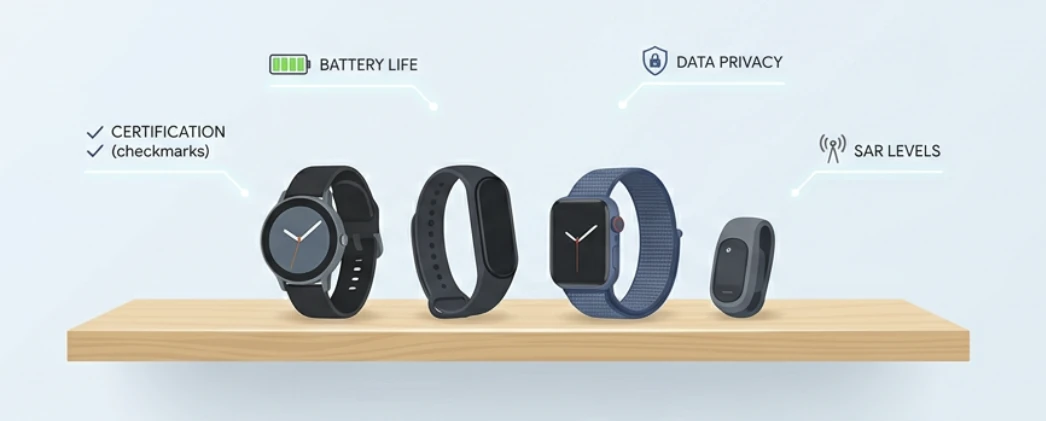
ViaMondo launched with guides rather than reviews, because a review means a device in hand and weeks of use, not a rewritten spec sheet. The first assessments are in progress. Below is exactly what we test and what's queued, so you can judge the method before the verdicts arrive.
The weekly brief is where each review lands first.
The short version: the same twelve checks on every device, so two reviews can actually be compared.
| What we check | Why it decides the purchase |
|---|---|
| Real battery life | Measured in daily use with location updates and calls — not the standby figure on the box. |
| Certification status | FCC ID and PTCRB checked against the public databases. Carrier-sold or open market, stated. |
| Published SAR | Compiled from the manufacturer's data and regulatory filings, with standard and test position attached. |
| Connectivity | Which radio it actually uses, which bands, and where it will and won't work. |
| Back-end platform | Who operates it, and in which country the data is stored. |
| Data retention | What the privacy policy states — and whether it states anything at all. |
| Companion app | Setup, alert reliability, behavior when the phone is locked, multi-carer access. |
| Alert latency | Time from the event to the notification actually arriving. |
| Who answers | Monitoring center, family app, or nobody. Response times where a service is involved. |
| Durability & wearability | Water resistance, strap, and whether the intended wearer will keep it on. |
| Total cost | Device plus subscription plus what stops working if the subscription lapses. |
| Company staying power | How long it's been trading, and what happens to the device if it stops. |
We buy devices, and we also accept review units from manufacturers. Where a unit was supplied, it says so at the top of that review, and the unit is returned or donated afterward.
No manufacturer sees a review before publication, none can approve or amend it, and no payment is accepted for coverage, rankings or placement.
What we don't do: we are not a test laboratory. We don't measure SAR, RF emissions or any other physical property. Published figures come from manufacturers' documentation and public regulatory filings, cited to source. Where no figure is published, we say so rather than estimating one.
Dates and updates. Every review carries the date it was published and the date it was last verified. Firmware and app updates change devices, and a two-year-old verdict on an app is worth very little.
In rough order. The list will shift as devices arrive and as readers ask for specific models.
Reader requests shape this list more than anything else. If you're choosing between two devices and can't find an honest comparison, that's exactly the review we should be writing. Email info@viamondo.com with the situation — who's wearing it and what you're worried about — and it goes on the list.
The segment guides already carry the buying criteria we'll be testing against, so they're useful before any verdict exists:
The four device types, real battery, school policies, and this category's security record.
Why home-exit alerts beat geofences, what keeps a device on, and consent.
What fall detection really catches, and what "monitored" actually means.
Two-way satellite messaging versus a one-way relay, and duty of care.
Not medical advice, and no prevention claims. Reviews describe what a device does and where it falls short. No wearable prevents falls, wandering or medical emergencies, and none replaces supervision or care.